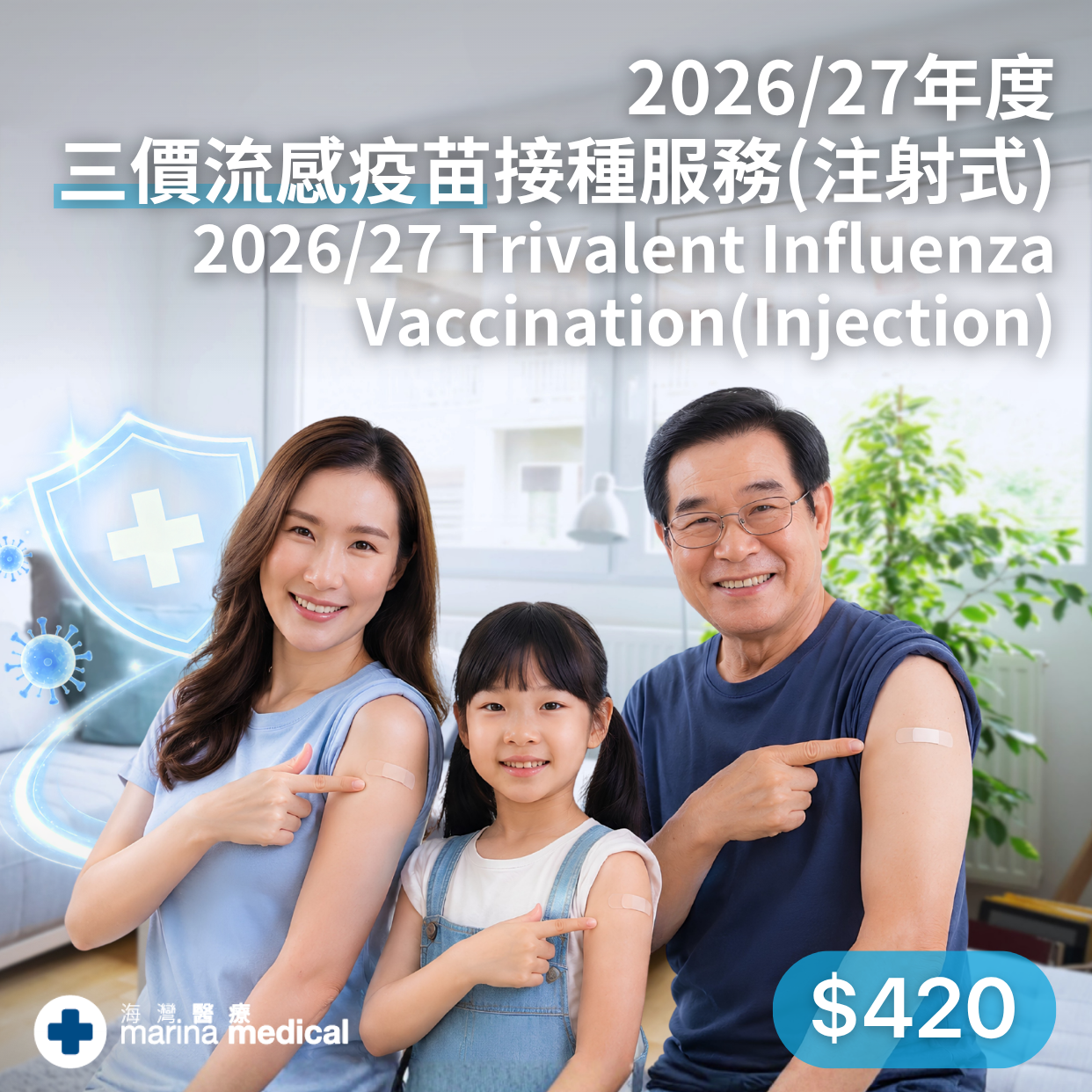
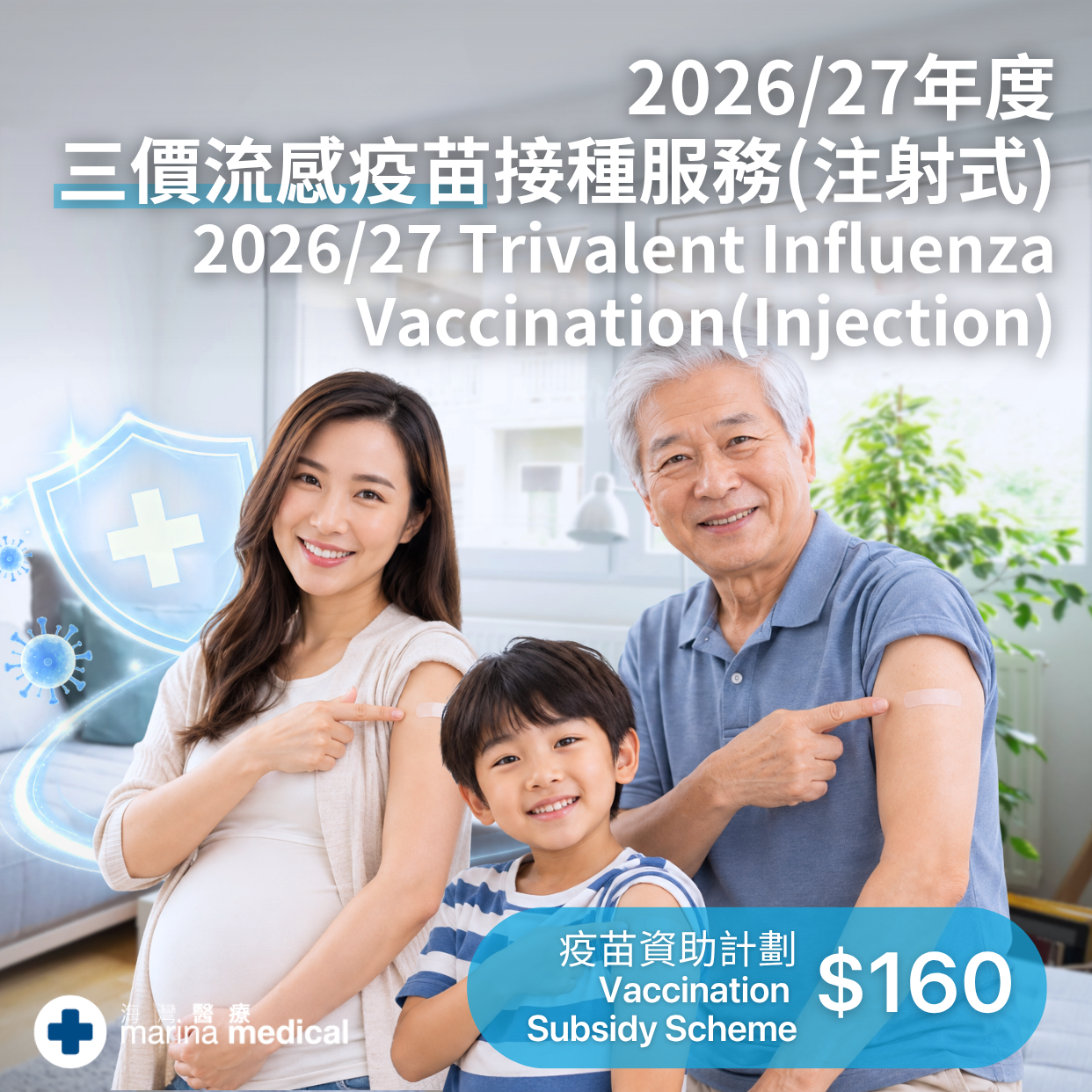
條款及細則|Terms and Conditions:
- 費用包括疫苗接種,1針流感疫苗,注射費。The fee includes vaccine administration and 1 dose of the Influenza Vaccine
- 注意⚠️ 有關流感疫苗接種-符合政府資助計劃的香港居民包括但不限於 | ATTENTION!⚠️ For influenza vaccination, the eligible group for the Vaccination Subsidy Scheme are HK Residents who fit in one of the following, but not limited to:
- 50歲或以上人士 (以出生年份計算)| Persons aged 50 years or above (Count by year of birth)
- 所有6個月至17歲的兒童或:| Children 6 months to 17 years old or:
- 18歲或以上就讀於香港中學的學生|18 years old or above studying at a secondary school in Hong Kong
- 孕婦 (持有有效的醫療證明書或由已登記的私家醫生確認懷孕狀況) | Pregnant women (with a valid medical certificate or with pregnancy status confirmed by the attending enrolled VSS doctor)
- 18至49歲 獲證明的智障或傷殘人士|Persons Aged 18 to 49 years with physical or intellectual disability who are holding a valid certificate
- 18至49歲患有特定慢性疾病的人士 | Persons aged 18 to 49 years with specified chronic medical conditions#
- 注意⚠️ 若從沒接種過流感疫苗或接種者是五歲或以下兒童,需要見醫生 | ATTENTION!⚠️ Doctor consultation would be required, if the person hasn't had influenza vaccination in the past OR is aged 5 or below
- 使用此服務前必須預約| Advance booking is required
- 海灣醫療保留最終解釋權 |Marina Medical reserves the right to the final decision concerning the offers mentioned above
---------------------------------------------------------------------------------------------
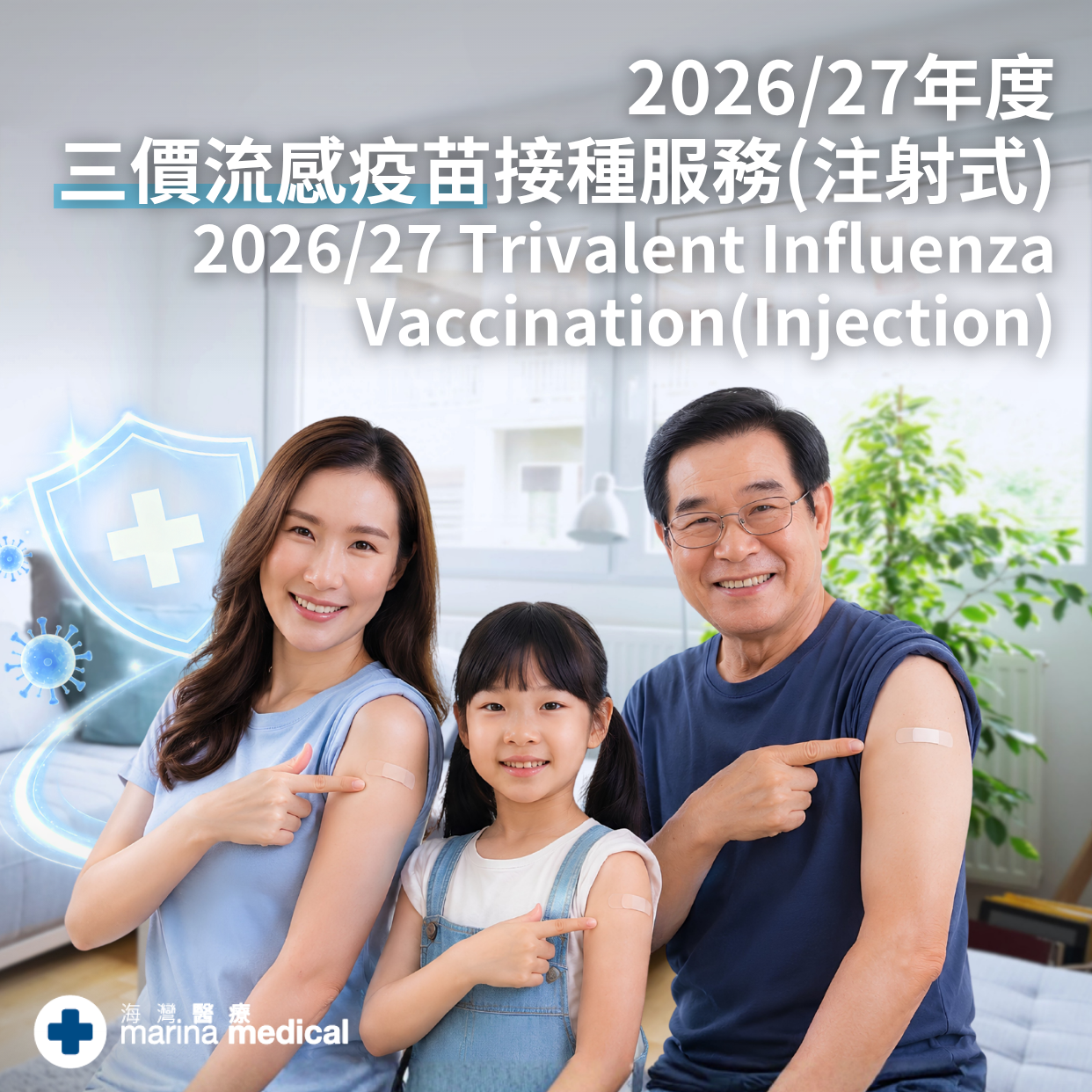
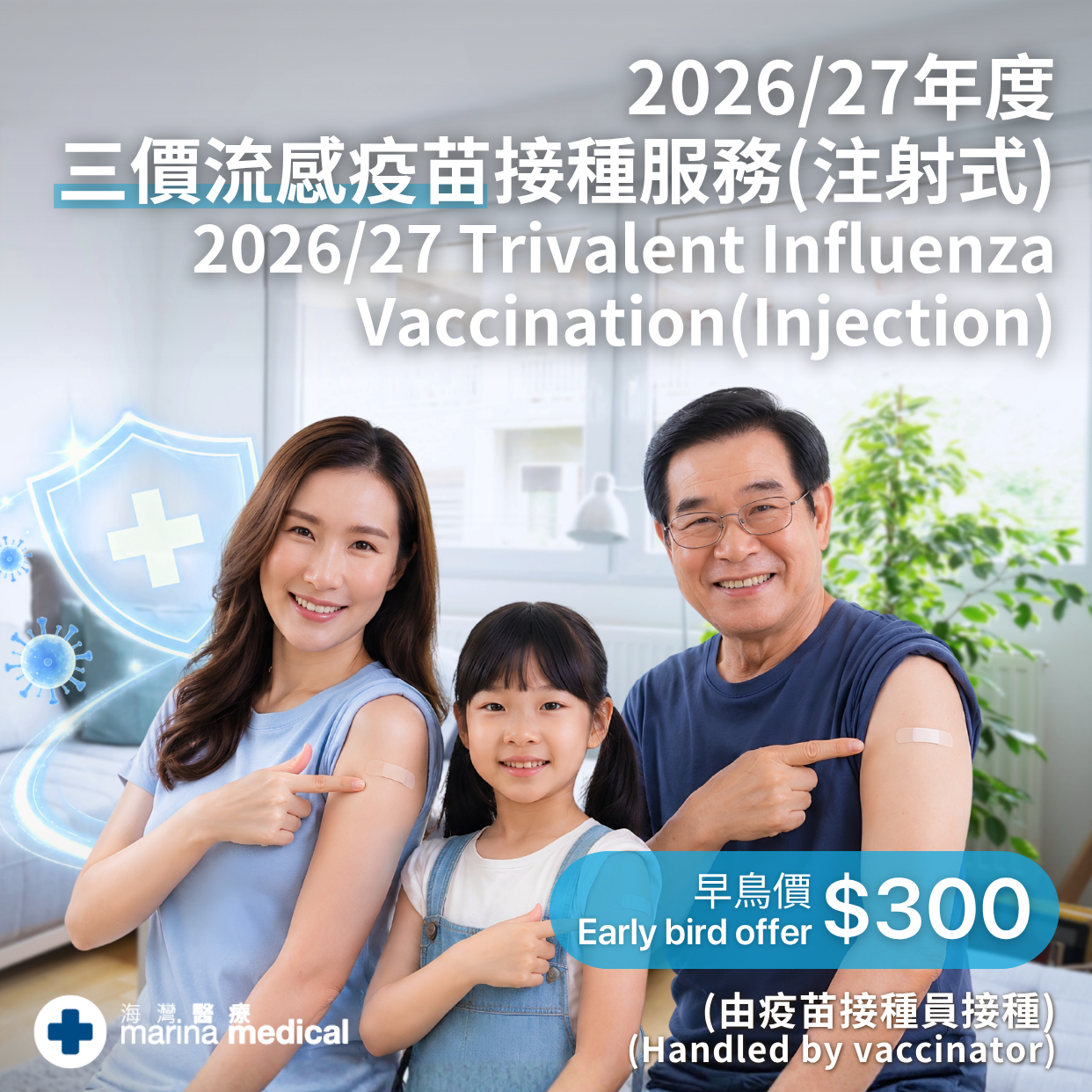
2026-2027 三價流感疫苗接種服務 | 2026-2027 Trivalent Influenza Vaccination Service
選擇您的接種方案與收費 Choose Your Vaccination Plan & Pricing
- [早鳥價] 自費(不包醫生費)| [Early bird offer] Self pay (Doctor Fee not included)
價格 Price: $300/針 $300/Dose - 自費(包醫生費)| Self pay (Doctor Fee included)
價格 Price: $420/針 $420/Dose - 疫苗資助計劃 | Vaccination Subsidy Scheme
價格 Price: $160/針 $160/Dose
為什麼要接種 Why Get Vaccinated?
| 流感不是普通感冒 | Flu is Not Just a Common Cold |
| 流感是由流感病毒引起的急性呼吸道傳染病,傳播迅速,在學校、托幼機構和養老院等場所易發生爆發疫情。老年人、嬰幼兒、慢性病患者和孕婦等高風險族群感染後危害更為嚴重。 | Influenza is an acute respiratory illness caused by influenza viruses. It spreads rapidly and can cause outbreaks in schools, childcare centers, and elderly care facilities. High‑risk groups including the elderly, infants, people with chronic conditions, and pregnant women face more severe risks. |
| ➡️ 每年接種流感疫苗,是保護自己和家人最有效的方式。 | ➡️ Get your flu shot every year – the most effective way to protect yourself and your family |
2026-2027 三價疫苗說明 About 2026-2027 Trivalent Flu Vaccine
| 今年只有三價疫苗?夠用嗎? | Trivalent Only? Is It Enough? |
| ✅ 答案是:夠用!完全夠用! | ✅ The answer is: Absolutely! |
| 世界衛生組織(WHO)根據全球監測數據,明確 2026-2027 年流感流行季僅推薦三價流感疫苗。自 2020 年 3 月以來,全球已連續多年未監測到 B/Yamagata 系病毒的自然流行。從四價到三價,是一次 科學上的精準調整。 | Based on global surveillance data, WHO recommends only trivalent influenza vaccines for the 2026-2027 season. The B/Yamagata lineage has not been detected globally since March 2020. The shift from quadrivalent to trivalent is a scientifically precise adjustment. |
| 覆蓋病毒株:A 型 H1N1、A 型 H3N2、B 型 Victoria 系 | Covers: Influenza A H1N1, A H3N2, B Victoria lineage |
| 疫苗類型:① 三價滅活疫苗(注射式,≥6月齡) ② 三價減毒活疫苗(鼻噴式,3-17歲) | Types: ① Inactivated (injection, ≥6 mo) ② Live Attenuated (nasal spray, 3-17 yrs) |
**“Educational note: flu vaccine categories, not separate products.”**
三種流感疫苗類型・作用機制 3 Types of Flu Vaccines – How They Work
| 目前流感疫苗依製程分為三種,各自擁有不同的作用原理與優勢: | Currently, flu vaccines are divided into three types based on manufacturing processes, each with distinct mechanisms and advantages: |
| ① 滅活疫苗(注射式) 使用經化學或物理方式已死亡的病毒配製而成。醫學界已證實,這些死病毒在人體內只觸發有限度的反應,不會複製,因此不會導致接種者生病,安全性極高。 | ① Inactivated Vaccine (Flu Shot) Formulated with viruses that have been chemically or physically inactivated (killed). Medical science confirms these inactivated viruses trigger only limited responses in the body and cannot replicate, so they will not cause illness in recipients, ensuring a high safety profile. |
| ② 重組蛋白疫苗(注射式) 利用基因重組技術生產血球凝集素(HA)——即流感病毒表面的關鍵抗原。整個製作過程完全不使用雞蛋或活病毒,純度高,且徹底避免「蛋適應」突變導致疫苗株與流行株不匹配的問題。 | ② Recombinant Protein Vaccine (Flu Shot) Produces haemagglutinin (HA) – a key surface antigen of the influenza virus – using recombinant technology. The entire manufacturing process does not require eggs or live viruses, resulting in high purity and completely avoiding the issue of “egg-adapted” mutations that can cause mismatches with circulating strains. |
| ③ 減活疫苗(鼻噴式) 含有已弱化的活病毒。與滅活疫苗相反,它模擬通過鼻腔自然感染,能誘發黏膜免疫、體液免疫及細胞免疫,因此可能產生較強且更持久的免疫保護。適用於 3-17 歲兒童及青少年。 | ③ Live-Attenuated Vaccine (Nasal Spray) Contains weakened (attenuated) live viruses. Unlike the inactivated vaccine, it simulates natural infection through the nasal passages, inducing mucosal, humoral, and cellular immunity, which may result in stronger and longer-lasting immune protection. Approved for children and adolescents aged 3–17 years. |
| 💡 關鍵提醒 無論是注射式還是鼻噴式,其保護成效皆取決於疫苗中所含病毒株(依世界衛生組織 WHO 建議)是否與當年在社區中實際流行的病毒株相容匹配。每年 WHO 都會根據全球監測數據更新建議,這也是為什麼每年都需要接種最新疫苗的原因。 | 💡 Key Reminder For both flu shots and nasal sprays, the effectiveness depends on whether the virus strains in the vaccine (based on WHO recommendations) are compatible with the virus strains actually circulating in the community that season. Each year, WHO updates its recommendations based on global surveillance data – which is exactly why you need a new shot every year. |
應該何時接種疫苗?When should I get vaccinated?
| 接種指南 | Vaccination Guide | |
| 🕐 最佳接種時間:9-10 月一般是最佳時間,未及時接種的人在整個流行季都可以接種。 | 🕐 Best time: September–October is optimal. Latecomers can still get vaccinated throughout the season. | |
| 💉 接種程序:6月齡-8歲首次接種需 2 劑(間隔≥4週),曾接種過則 1 劑;9 歲及以上僅需 1 劑。 | 💉 Schedule: 6 mo–8 yrs: 2 doses (≥4 wks apart) for first‑timers, 1 dose if previously vaccinated; Ages 9+: 1 dose. | |
| ⚠️ 接種禁忌:對疫苗任何成分過敏或曾有嚴重過敏史者,禁止接種。 | ⚠️ Contraindications: Do not vaccinate if allergic to any component or with history of severe allergic reaction. |
常見問題 Frequently Asked Questions
| Q1:流感疫苗需要每年接種嗎? | Q1: Do I need to get vaccinated every year? |
| A:需要。接種後抗體保護作用可持續 6-8 個月,且流感病毒每年都可能變異,因此需要每年接種,才能獲得對應當年流行病毒株的最新保護力。 | A: Yes. Vaccine-induced protection lasts 6-8 months, and flu viruses mutate yearly. Annual vaccination is necessary to ensure protection against the latest circulating strains for that season. |
| Q2:接種後多久產生保護力? | Q2: How long does it take to develop immunity after vaccination? |
| A:通常接種後 2-4 週 可產生具有保護水準的抗體。因此建議在流感季節來臨前(9-10 月)儘早接種,以確保在流行高峰期前獲得完整保護。 | A: Protective antibody levels typically develop 2-4 weeks after vaccination. It is therefore recommended to get vaccinated early (September–October) before the flu season peaks, to ensure full protection is in place. |
| Q3:孕婦可以接種流感疫苗嗎? | Q3: Can pregnant women get the flu vaccine? |
| A:可以。過去部分疫苗說明書曾將孕婦列為禁忌,但目前已有充分證據支持孕婦接種的安全性。指南明確建議,孕婦可接種未將妊娠期列為接種禁忌的流感疫苗。接種不僅保護母親,也可降低新生兒出生後感染流感的風險。 | A: Yes. Although some package inserts previously listed pregnant women as a contraindication, there is now substantial evidence supporting the safety of vaccination during pregnancy. The guidelines clearly recommend that pregnant women may receive flu vaccines that do not list pregnancy as a contraindication. Vaccination protects both the mother and reduces the risk of influenza in newborns after birth. |
| Q4:接種過流感疫苗,為什麼還是感冒了? | Q4: I got the flu shot, so why did I still catch a cold? |
| A:首先需區分「感冒」與「流感」。流感疫苗只預防流感病毒,不預防其他引起普通感冒的病毒(如鼻病毒、冠狀病毒、腺病毒等)。此外,疫苗保護力並非 100%,但接種後即使感染流感,症狀通常較輕微,併發症(如肺炎、心肌炎)的風險也顯著降低。 | A: First, it is important to distinguish between a “cold” and the “flu.” The flu vaccine only protects against influenza viruses, not against other viruses that cause common colds (such as rhinoviruses, coronaviruses, or adenoviruses). In addition, vaccine effectiveness is not 100%, but even if you do get the flu after vaccination, symptoms are typically milder and the risk of complications (such as pneumonia or myocarditis) is significantly reduced. |
| Q5:我對雞蛋過敏,可以接種流感疫苗嗎? | Q5: I‘m allergic to eggs. Can I get the flu vaccine? |
| A:可以。《中國藥典》(2015 版及 2020 版)均未將雞蛋過敏列為流感疫苗接種禁忌。《中國流感疫苗預防接種技術指南(2025-2026)》亦明確建議,雞蛋過敏者可以接種說明書中未將雞蛋過敏列為禁忌的流感疫苗。目前國內流感疫苗的卵清蛋白含量遠低於藥典標準,安全性無虞。對雞蛋有輕度過敏者,接種後建議觀察 30 分鐘。 | A: Yes. The Chinese Pharmacopoeia (2015 and 2020 editions) does not list egg allergy as a contraindication to flu vaccination. The China Influenza Vaccination Technical Guidelines (2025-2026) also clearly recommend that individuals with egg allergy may receive flu vaccines whose package inserts do not list egg allergy as a contraindication. The ovalbumin content in currently available flu vaccines in China is far below the pharmacopoeia standard, ensuring safety. Those with mild egg allergy are advised to be observed for 30 minutes after vaccination. |
| Q6:哺乳期婦女可以接種流感疫苗嗎? | Q6: Can breastfeeding women get the flu vaccine? |
| A:可以。哺乳期婦女接種流感疫苗是安全的,接種後可正常哺乳。母親接種後產生的抗體可透過母乳傳遞給嬰兒,為 6 個月以下(尚未達到流感疫苗接種年齡)的嬰兒提供被動保護,減少其感染流感的風險。 | A: Yes. Breastfeeding women can safely receive the flu vaccine and continue breastfeeding as usual afterwards. Antibodies produced by the mother after vaccination can be transferred to the infant through breast milk, providing passive protection for infants under 6 months of age (who are not yet eligible for flu vaccination) and reducing their risk of influenza infection. |
| Q7:重組蛋白疫苗真的比傳統滅活疫苗更有效嗎? | Q7: Is recombinant protein vaccine really more effective than traditional inactivated vaccine? |
| A:研究顯示,重組蛋白疫苗在成年人中降低實驗室確診流感的風險方面,優於標準劑量滅活疫苗(相對疫苗效力約 30%)。重組疫苗能誘導更強的抗體反應,且生產過程完全不使用雞蛋,徹底避免了「蛋適應」突變導致疫苗株與流行株不匹配的問題。因此,美國 CDC 已將重組蛋白疫苗列為 65 歲及以上長者 的優先推薦疫苗之一。不過,重組疫苗生產成本較高,價格通常也較貴。 | A: Studies show that recombinant protein vaccines reduce the risk of laboratory-confirmed influenza in adults compared to standard-dose inactivated vaccines (relative vaccine effectiveness of approximately 30%). Recombinant vaccines induce stronger antibody responses and, because the production process does not use eggs at all, they completely avoid the issue of “egg-adapted” mutations that can cause mismatches between vaccine strains and circulating strains. As a result, the U.S. CDC has listed recombinant protein vaccines as one of the preferentially recommended vaccines for adults aged 65 and older. However, recombinant vaccines are more costly to produce and are typically more expensive. |